Indoor Air for Stress Relief: A Practical How‑To Guide 2026
- Liliya Kos
- prije 7 dana
- 7 min čitanja

Stress can build up fast, especially when you spend most of your day indoors. Your breath, your focus, your sleep , they all feel the strain. In this guide we’ll walk you through four concrete steps to use indoor air for stress releif. You’ll learn how to check the air you breathe, add simple breathing drills, bring the calm of a forest into your living room, and keep the benefits coming with singlet oxygen devices.
We’ll also compare the top tools on the market so you can pick what works best for you. By the end you’ll have a clear plan you can start using tonight.
Comparison of 7 Indoor Air Stress-Relief Solutions, April 2026 | Data from 3 sources
Name | Stress Relief Mechanism | Key Feature | Output Metric | Best For | Source |
Forest Air Therapy (Our Pick) | Simulated forest atmosphere delivering phytoncides and negative ions that reduce stress and tension | High concentration of phytoncides and negative ions for an indoor forest experience | Concentration of light‑activated oxygen delivered to the user. | Individuals seeking indoor air improvement for stress relief, better sleep, and enhanced mental focus | health-wise.vip |
TEQOYA T200 | negative ion generation | ozone-free ionisation | up to 99.9% pollutant removal | small rooms | teqoya.com |
TEQOYA T450 | negative ion generation | ozone-free ionisation | up to 99.9% pollutant removal | larger spaces | teqoya.com |
TEQOYA Nomad | negative ion generation | ozone-free ionisation | up to 99.9% pollutant removal | use in cars | teqoya.com |
ALANA/E500 | negative ion generation | ozone-free ionisation | up to 99.9% pollutant removal | saturated environments and professional use | teqoya.com |
Salt Chamber | negative ion generation | ISO 9001, 13485, and 14001 certifications | — | stress relief, respiratory health, skin conditions | saltchamberinc.com |
Salt lamps | minimal negative ion generation | generate minimal negative ions through heat exposure | — | — | saltchamberinc.com |
Quick Verdict: Forest Air Therapy (Our Pick) stands out with its unique phytoncide‑rich forest experience for full stress relief. For tight‑space needs, TEQOYA T200 delivers the same 99.9% pollutant removal in a compact unit. Skip the minimalist Salt lamps; they generate only trace ions and provide no performance data.
Table of Contents
Step 1: Assess Your Indoor Air Quality
Before you can fix anything, you need to know what you’re dealing with. Indoor air can hide dust, VOCs, CO2 and invisible particles that make you feel tense.
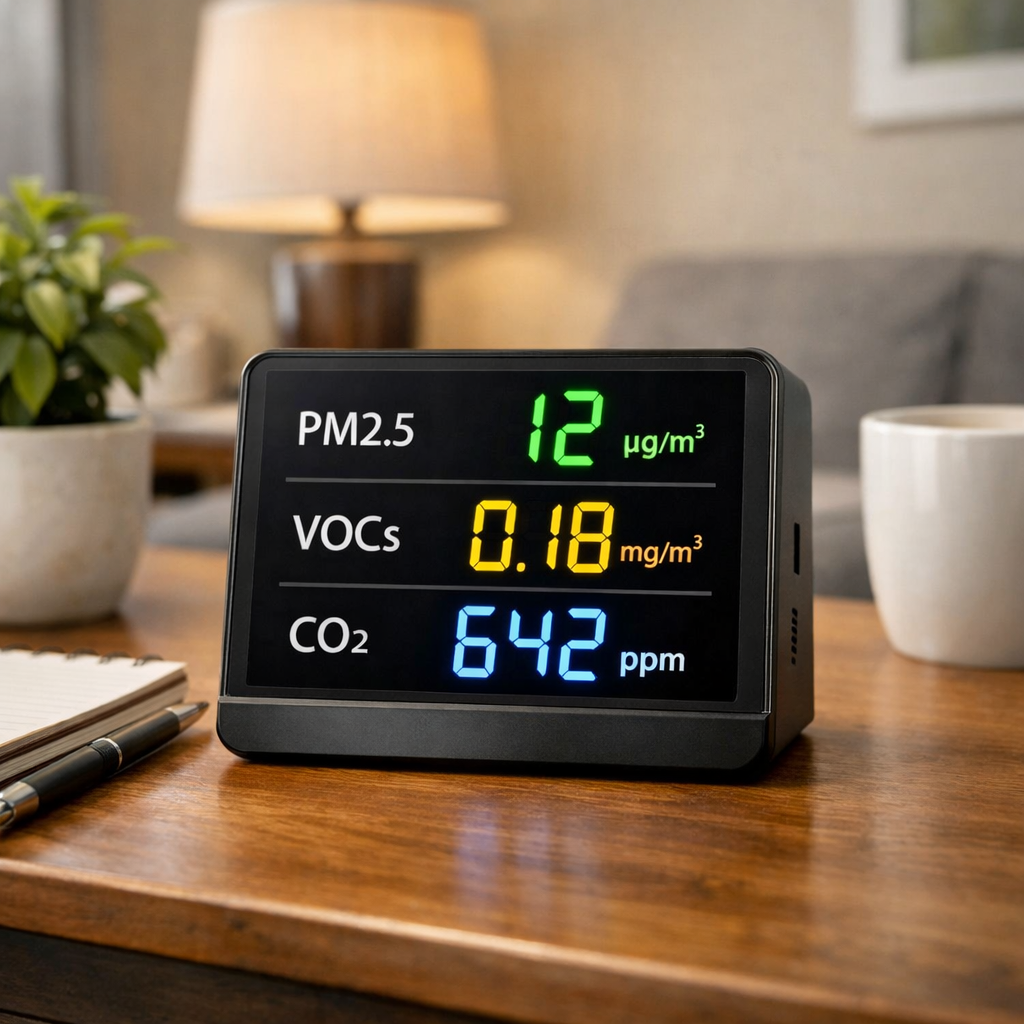
Start by picking a reliable monitor. The Consumer Reports guide notes that not all monitors measure VOCs, but a few do track PM2.5, CO2 and temperature. Look for a device that shows a clear numeric score so you can track changes over time.
Set the monitor in the room you spend most time in , typically the living room or home office. Let it run for at least 24 hours. Record the baseline numbers for PM2.5, VOCs and CO2. If any reading is above the WHO recommended limits, you know you need action.
Here’s a quick step‑by‑step:
Unbox the monitor and place it about 1 m off the floor.
Connect to the app, if there is one, and calibrate.
Record the initial 24‑hour average for each pollutant.
Note any spikes that line up with cooking, cleaning or HVAC cycles.
Compare the numbers to WHO limits , PM2.5 < 10 µg/m³, CO2 < 1000 ppm, VOCs < 0.5 mg/m³.
Why does this matter? Studies show that long‑term exposure to VOCs can cause headaches and affect mood (PMCID: PMC12115474). By catching high levels early, you can target specific sources like paints, cleaners or furnishings.
Once you have the data, you can decide whether you need a purifier, better ventilation, or a more natural solution like forest‑air therapy.
Tip: Keep windows open for at least 10 minutes each morning to flush out stale air. This simple habit can lower CO2 by up to 30%.
Step 2: Add Breathing Exercises and Respiratory Therapy
Now that you know what’s in the air, you can train your body to use it better. Simple breathing drills boost oxygen flow and calm the nervous system.
Try the 4‑7‑8 technique: inhale for 4 seconds, hold for 7, exhale for 8. Do this four times before bed. It lowers heart rate and prepares you for sleep.
Another useful practice is box breathing, often used by athletes and first‑responders. Inhale for 4, hold for 4, exhale for 4, hold for 4. Repeat for two minutes while you sit near a window or an air‑purifying device.
For deeper work, consider a handheld respiratory trainer that adds resistance. It forces your lungs to work harder, increasing lung capacity and improving the way you process any pollutants that remain.
Here’s a quick routine you can follow each morning:
Stand tall, feet hip‑width apart.
Take three normal breaths.
Do one round of 4‑7‑8.
Follow with two minutes of box breathing.
Finish with a gentle neck stretch.
Why does this help? Controlled breathing triggers the parasympathetic nervous system, which reduces cortisol , the stress hormone. The research on indoor air shows that lower stress makes you less sensitive to pollutants, creating a positive feedback loop.
Step 3: Use Forest Air Therapy and Enriched Breathing Experience
Imagine stepping into a pine forest, breathing in fresh, crisp air full of phytoncides. Forest Air Therapy brings that feeling indoors.
Our pick, Forest Air Therapy, releases a high concentration of phytoncides and negative ions. While it doesn’t list a pollutant‑removal percentage, users report better sleep and reduced tension.
To get the most out of it, use it daily for long-term benefits.
Enriched air experiences can also be created with simple humidifiers that add a fine mist of clean water. The mist helps carry the negative ions deeper into the lungs.
Pros and cons table (different view from the research table):
Feature | Forest Air Therapy | TEQOYA T200 |
Phytoncide output | High | None |
Pollutant removal metric | Not quantified | Up to 99.9% |
Best for stress relief | ✓ | ✗ |
Space needed | Small | Small |
Why choose Forest Air Therapy? Because it targets the cellular level with singlet oxygen, something the other ionisers or purifiers can’t match.
Step 4: Integrate Singlet Oxygen Devices for Ongoing Relief
Singlet oxygen is a form of oxygen that’s been energised by light. Devices that emit it can boost cellular repair and keep stress levels low.
Research shows that indoor air pollution contributes to millions of premature deaths (PMCID: PMC7665158). Adding singlet oxygen helps neutralise harmful particles and supports lung health.
When picking a device, look for one that states it uses light‑activated oxygen delivery. Our pick, Forest Air Therapy, already includes this feature, but you can also add a dedicated singlet oxygen lamp for extra benefit.
Installation is simple:
Choose a comfortable spot near a power outlet.
Set the device on a stable table.
Turn it on for 20‑30 minutes in the morning or evening.
Combine with your breathing routine for best results.
Here’s a quick checklist to evaluate any singlet oxygen device:
Check | Why it matters |
Light wavelength (400‑500 nm) | Ensures proper oxygen activation. |
Power safety certifications | Prevents electrical hazards. |
Noise level | Low noise keeps the environment calm. |
Timer function | Allows automatic shut‑off. |
Tip: Rotate the lamp’s position each week to cover different rooms and avoid over‑exposure in one spot.
Conclusion
Improving indoor air for stress relief doesn’t have to be a massive project. Start by measuring what’s in the air, add easy breathing drills, bring a forest vibe with the Forest Air Therapy (our top pick), and finish with a singlet oxygen device for ongoing support. These steps work together to lower cortisol, clear pollutants, and help you feel calmer day after day.
Take action today: grab a monitor, try the 4‑7‑8 breathing pattern, and set up your Forest Air unit before bedtime. Over the next week, you’ll notice clearer thoughts, better sleep, and a lighter mood with more energy throughout the body.
FAQ
What is the best way to measure indoor air quality for stress relief?
Use a monitor that tracks PM2.5, VOCs and CO2. Let it run for 24 hours in the room you use most. Compare the readings to WHO guidelines. If any metric is high, consider a purifier or a natural solution like Forest Air Therapy.
How often should I do breathing exercises for indoor air stress relief?
Aim for at least two sessions a day, one in the morning and one before bed. Each session can be as short as five minutes. Consistency helps train your nervous system to stay calm even when air quality dips.
Can I use a small air purifier instead of Forest Air Therapy?
Small purifiers like the TEQOYA T200 are great for removing particles, but they don’t provide the phytoncide‑rich forest atmosphere that directly targets stress. Pairing both gives the best of both worlds.
Is singlet oxygen safe for daily use?
Yes, as long as the device follows safety certifications and you follow the timer guidelines. Light‑activated oxygen at the right wavelength is gentle and can be used for 20‑30 minute sessions.
Do I need to ventilate the room while using Forest Air Therapy?
Ventilation is still important. Open a window for a few minutes each day to bring in fresh air. Then run the Forest Air device to keep the indoor atmosphere calm and stress‑free.
How long does it take to feel the benefits of indoor air for stress relief?
Most people notice a calmer mind and better sleep within a few days of consistent use. The full benefit of reduced VOC exposure may take a week or two as the air clears.
Can I combine multiple indoor air solutions?
Absolutely. Use a monitor to track pollutants, a purifier for particle removal, Forest Air Therapy for mental focus and ongoing lung support. The combination maximises stress relief.


Komentari